
Il granito è un tipo di roccia ignea estratta per la sua estrema resistenza, densità, durabilità e resistenza alla corrosione. Ma il granito è anche molto versatile: non è adatto solo a forme quadrate e rettangolari! Infatti, lavoriamo regolarmente con successo con componenti in granito progettati in forme, angoli e curve di ogni tipo.
Grazie ai nostri processi all'avanguardia, le superfici di taglio possono risultare eccezionalmente piane. Queste qualità rendono il granito il materiale ideale per la realizzazione di basi per macchinari e componenti metrologici su misura, sia per dimensioni che per design. Il granito è:
■ lavorabile
■ perfettamente piatto una volta tagliato e rifinito
■ resistente alla ruggine
■ durevole
■ di lunga durata
I componenti in granito sono inoltre facili da pulire. Quando si realizzano progetti personalizzati, è fondamentale scegliere il granito per i suoi vantaggi superiori.
STANDARD / APPLICAZIONI AD ALTA USURA
Il granito utilizzato da ZHHIMG per i nostri prodotti standard di piani di riscontro ha un alto contenuto di quarzo, che offre una maggiore resistenza all'usura e ai danni. I nostri colori Superior Black hanno bassi tassi di assorbimento d'acqua, riducendo al minimo la possibilità che i vostri calibri di precisione si arrugginiscano quando appoggiati sui piani. I colori del granito offerti da ZHHIMG riducono i riflessi, il che significa meno affaticamento visivo per chi utilizza i piani. Abbiamo scelto i nostri tipi di granito tenendo conto della dilatazione termica, al fine di minimizzare questo aspetto.
APPLICAZIONI PERSONALIZZATE
Quando la tua applicazione richiede una piastra con forme personalizzate, inserti filettati, scanalature o altre lavorazioni meccaniche, ti conviene scegliere un materiale come il Black Jinan Black. Questo materiale naturale offre rigidità superiore, eccellente smorzamento delle vibrazioni e migliore lavorabilità.
È importante notare che il colore da solo non è indicativo delle qualità fisiche della pietra. In generale, il colore del granito è direttamente correlato alla presenza o all'assenza di minerali, che potrebbero non avere alcuna influenza sulle qualità che lo rendono un buon materiale per piani di riscontro. Esistono graniti rosa, grigi e neri eccellenti per i piani di riscontro, così come graniti neri, grigi e rosa totalmente inadatti per applicazioni di precisione. Le caratteristiche critiche del granito, per quanto riguarda il suo utilizzo come materiale per piani di riscontro, non hanno nulla a che vedere con il colore e sono le seguenti:
■ Rigidità (deformazione sotto carico - indicata dal modulo di elasticità)
■ Durezza
■ Densità
■ Resistenza all'usura
■ Stabilità
■ Porosità
Abbiamo testato e confrontato numerosi materiali granitici. Alla fine, siamo giunti alla conclusione che il granito nero di Jinan è il migliore che abbiamo mai conosciuto. Il granito nero indiano e quello sudafricano sono simili al granito nero di Jinan, ma le loro proprietà fisiche sono inferiori. ZHHIMG continuerà a ricercare altri materiali granitici in tutto il mondo e a confrontarne le proprietà fisiche.
Per maggiori informazioni sul granito più adatto al vostro progetto, non esitate a contattarci.info@zhhimg.com.
Produttori diversi utilizzano standard diversi. Esistono moltissimi standard nel mondo.
Lo standard DIN, ASME B89.3.7-2013 o la specifica federale GGG-P-463c (piastre di superficie in granito) e così via come base per le loro specifiche.
Possiamo produrre piastre di ispezione di precisione in granito secondo le vostre esigenze. Non esitate a contattarci per ulteriori informazioni su altri standard.
La planarità può essere definita come la condizione in cui tutti i punti della superficie sono contenuti tra due piani paralleli: il piano di base e il piano del tetto. La distanza tra i due piani rappresenta la planarità complessiva della superficie. Questa misurazione della planarità è generalmente soggetta a una tolleranza e può includere una classificazione.
Ad esempio, le tolleranze di planarità per tre gradi standard sono definite nella specifica federale come determinate dalla seguente formula:
■ Grado di laboratorio AA = (40 + diagonale al quadrato/25) x 0,000001" (unilaterale)
■ Grado di ispezione A = Grado di laboratorio AA x 2
■ Grado B per officina = Grado AA per laboratorio x 4.
Per le piastre di riscontro di dimensioni standard, garantiamo tolleranze di planarità che superano i requisiti di questa specifica. Oltre alla planarità, le norme ASME B89.3.7-2013 e Federal Specification GGG-P-463c trattano argomenti quali: accuratezza della misurazione ripetibile, proprietà dei materiali dei graniti per piastre di riscontro, finitura superficiale, posizione dei punti di supporto, rigidità, metodi di ispezione accettabili, installazione di inserti filettati, ecc.
Le piastre di riscontro e le piastre di ispezione in granito ZHHIMG soddisfano o superano tutti i requisiti stabiliti nella presente specifica. Attualmente non esiste una specifica che definisca le piastre angolari, i paralleli o le squadre di riferimento in granito.
E puoi trovare le formule per altri standard inSCARICAMENTO.
Innanzitutto, è importante mantenere pulita la piastra. La polvere abrasiva presente nell'aria è solitamente la principale causa di usura della piastra, poiché tende a depositarsi sui pezzi in lavorazione e sulle superfici di contatto degli strumenti di misura. In secondo luogo, è consigliabile coprire la piastra per proteggerla dalla polvere e da eventuali danni. La durata utile può essere prolungata coprendo la piastra quando non viene utilizzata, ruotandola periodicamente in modo che una singola area non sia soggetta a un'usura eccessiva e sostituendo i contatti in acciaio degli strumenti di misura con contatti in carburo. Inoltre, è bene evitare di appoggiare cibo o bevande gassate sulla piastra. Molte bevande gassate contengono acido carbonico o fosforico, che possono dissolvere i minerali più teneri e lasciare piccole cavità sulla superficie.
Dipende da come viene utilizzata la piastra. Se possibile, consigliamo di pulirla all'inizio della giornata (o del turno di lavoro) e di nuovo alla fine. Se la piastra si sporca, in particolare con liquidi oleosi o appiccicosi, è consigliabile pulirla immediatamente.
Pulire regolarmente la piastra con un detergente liquido o con il detergente per superfici senza acqua ZHHIMG. La scelta della soluzione detergente è importante. Se si utilizza un solvente volatile (acetone, diluente per vernici, alcol, ecc.), l'evaporazione raffredderà la superficie e la deformerà. In questo caso, è necessario lasciare che la piastra si stabilizzi prima di utilizzarla, altrimenti si verificheranno errori di misurazione.
Il tempo necessario affinché la piastra si normalizzi varia in base alle sue dimensioni e al grado di raffreddamento. Un'ora dovrebbe essere sufficiente per le piastre più piccole. Per le piastre più grandi potrebbero essere necessarie due ore. Se si utilizza un detergente a base d'acqua, si verificherà anche un raffreddamento per evaporazione.
La piastra tratterrà anche l'acqua, e questo potrebbe causare la formazione di ruggine sulle parti metalliche a contatto con la superficie. Alcuni detergenti, inoltre, lasciano un residuo appiccicoso dopo l'asciugatura, che attira la polvere presente nell'aria e, di fatto, aumenta l'usura anziché diminuirla.
Ciò dipende dall'utilizzo della piastra e dall'ambiente. Si consiglia di sottoporre una nuova piastra o un accessorio di precisione in granito a una ricalibrazione completa entro un anno dall'acquisto. Se la piastra in granito sarà soggetta a un utilizzo intensivo, potrebbe essere opportuno ridurre questo intervallo a sei mesi. Un'ispezione mensile per la rilevazione di errori di misurazione ripetuti, effettuata con una livella elettronica o un dispositivo simile, permetterà di individuare eventuali segni di usura e richiede solo pochi minuti. Dopo aver determinato i risultati della prima ricalibrazione, l'intervallo di calibrazione può essere esteso o ridotto in base a quanto consentito o richiesto dal sistema di qualità interno.
Possiamo offrirti un servizio di assistenza per l'ispezione e la calibrazione della tua lastra di granito.

Esistono diverse possibili cause di variazioni tra le calibrazioni:
- La superficie è stata lavata con una soluzione calda o fredda prima della calibrazione e non le è stato concesso un tempo sufficiente per la normalizzazione
- La piastra non è supportata correttamente
- variazione di temperatura
- Bozze
- Luce solare diretta o altre fonti di calore radiante sulla superficie del piatto. Assicurarsi che l'illuminazione dall'alto non riscaldi la superficie.
- Variazioni del gradiente termico verticale tra inverno ed estate (se possibile, conoscere il gradiente termico verticale al momento della calibrazione).
- La piastra non ha avuto tempo sufficiente per normalizzarsi dopo la spedizione.
- Uso improprio delle apparecchiature di ispezione o utilizzo di apparecchiature non calibrate
- Modifiche superficiali dovute all'usura
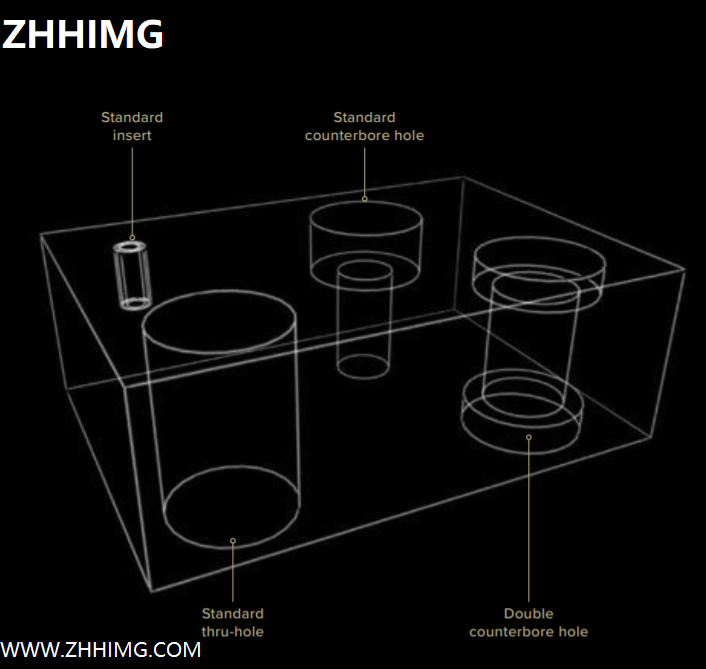
Quanti tipi di fori si possono realizzare su granito di precisione?
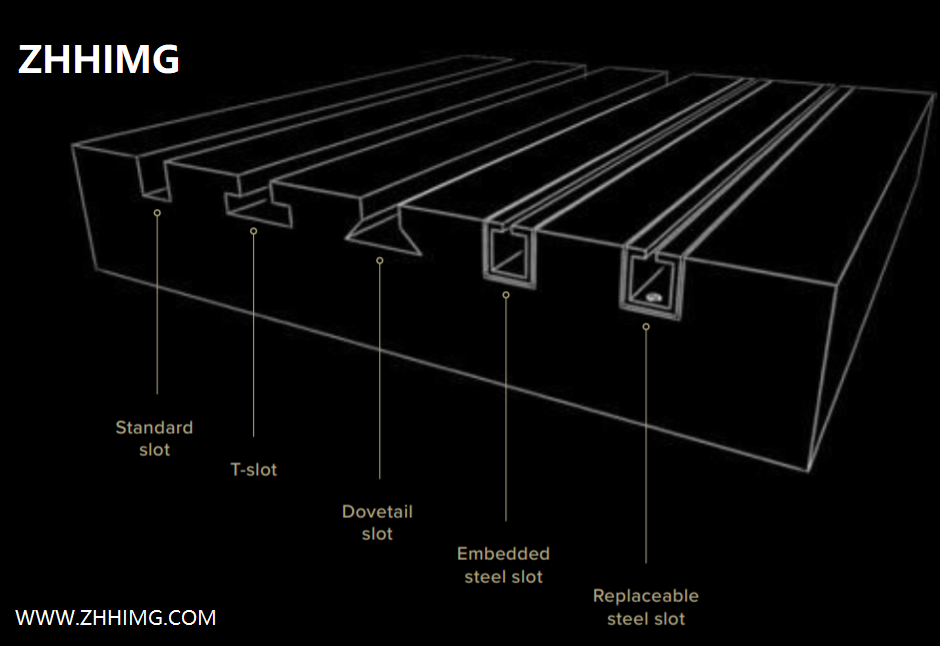
Fessure su componenti di granito di precisione
In molte fabbriche, sale di controllo qualità e laboratori, le piastre di riscontro in granito di precisione sono fondamentali per misurazioni accurate. Poiché ogni misurazione lineare dipende da una superficie di riferimento precisa da cui vengono ricavate le dimensioni finali, le piastre di riscontro offrono il miglior piano di riferimento per l'ispezione e la tracciatura dei pezzi prima della lavorazione. Sono inoltre basi ideali per effettuare misurazioni di altezza e per la calibrazione delle superfici. Inoltre, l'elevato grado di planarità, stabilità, qualità generale e cura nella lavorazione le rendono un'ottima scelta per il montaggio di sofisticati sistemi di misurazione meccanici, elettronici e ottici. Per ognuno di questi processi di misurazione, è indispensabile mantenere le piastre di riscontro calibrate.
Ripeti le misurazioni e la planarità
Sia la planarità che la ripetibilità delle misurazioni sono fondamentali per garantire una superficie di precisione. La planarità può essere definita come la condizione in cui tutti i punti della superficie sono contenuti tra due piani paralleli: il piano di base e il piano di copertura. La distanza tra i due piani rappresenta la planarità complessiva della superficie. Questa misurazione della planarità è generalmente soggetta a una tolleranza e può includere una classificazione.
Le tolleranze di planarità per tre gradi standard sono definite nelle specifiche federali come determinate dalla seguente formula:
Norma DIN, norma GB, norma ASME, norma JJS... ogni paese ha uno standard diverso...
Maggiori dettagli sullo standard.
Oltre alla planarità, è necessario garantire la ripetibilità. Una misurazione ripetuta è una misurazione di aree di planarità locali. Si tratta di una misurazione effettuata in qualsiasi punto della superficie di una piastra che si ripeterà entro la tolleranza dichiarata. Il controllo della planarità di aree locali con una tolleranza più ristretta rispetto alla planarità complessiva garantisce una variazione graduale del profilo di planarità della superficie, minimizzando così gli errori locali.
Per garantire che una piastra di riscontro soddisfi sia le specifiche di planarità che quelle di ripetibilità delle misurazioni, i produttori di piastre di riscontro in granito dovrebbero utilizzare la specifica federale GGG-P-463c come base per le proprie specifiche. Questa norma riguarda l'accuratezza della ripetibilità delle misurazioni, le proprietà del materiale del granito delle piastre di riscontro, la finitura superficiale, la posizione dei punti di supporto, la rigidità, i metodi di ispezione accettabili e l'installazione degli inserti filettati.
Verifica dell'accuratezza della piastra
Seguendo alcune semplici linee guida, un investimento in una piastra di riscontro in granito dovrebbe durare molti anni. A seconda dell'utilizzo della piastra, dell'ambiente di lavoro e della precisione richiesta, la frequenza di verifica della precisione della piastra varia. In generale, si consiglia di ricalibrare completamente una piastra nuova entro un anno dall'acquisto. Se la piastra viene utilizzata frequentemente, è consigliabile ridurre questo intervallo a sei mesi.
Prima che una piastra di riscontro si usuri oltre le specifiche di planarità complessiva, mostrerà dei perni usurati o ondulati. L'ispezione mensile per errori di misurazione ripetuti, utilizzando un comparatore di precisione, permetterà di identificare i punti di usura. Un comparatore di precisione è uno strumento ad alta precisione che rileva errori locali e può essere visualizzato su un amplificatore elettronico ad alto ingrandimento.
Un programma di ispezione efficace dovrebbe includere controlli periodici con un autocollimatore, che fornisca una calibrazione effettiva della planarità complessiva riconducibile al National Institute of Standards and Technology (NIST). Periodicamente, è necessaria una calibrazione completa da parte del produttore o di una società indipendente.
Variazioni tra le calibrazioni
In alcuni casi, si riscontrano variazioni nella calibrazione delle piastre di riscontro. Talvolta, fattori come le modifiche superficiali dovute all'usura, l'uso scorretto delle apparecchiature di ispezione o l'utilizzo di apparecchiature non calibrate possono spiegare tali variazioni. I due fattori più comuni, tuttavia, sono la temperatura e il supporto.
Una delle variabili più importanti è la temperatura. Ad esempio, la superficie potrebbe essere stata lavata con una soluzione calda o fredda prima della calibrazione e non aver avuto il tempo sufficiente per normalizzarsi. Altre cause di variazione di temperatura includono correnti d'aria fredda o calda, luce solare diretta, illuminazione dall'alto o altre fonti di calore radiante sulla superficie della piastra.
Possono inoltre verificarsi variazioni nel gradiente termico verticale tra inverno ed estate. In alcuni casi, la piastra non ha il tempo sufficiente per stabilizzarsi dopo la spedizione. È consigliabile registrare il gradiente termico verticale al momento della calibrazione.
Un'altra causa comune di variazione nella calibrazione è un supporto inadeguato della piastra. Una piastra di riscontro dovrebbe essere supportata in tre punti, idealmente posizionati al 20% della lunghezza dalle estremità della piastra. Due supporti dovrebbero essere posizionati al 20% della larghezza dai lati lunghi, e il supporto rimanente dovrebbe essere centrato.
Solo tre punti possono appoggiare saldamente su qualsiasi superficie che non sia di precisione. Tentare di sostenere la piastra in più di tre punti farà sì che la piastra riceva il suo supporto da varie combinazioni di tre punti, che non saranno gli stessi tre punti su cui è stata sostenuta durante la produzione. Ciò introdurrà errori poiché la piastra si fletterà per adattarsi alla nuova disposizione dei punti di supporto. Si consiglia di utilizzare supporti in acciaio con travi di supporto progettate per allinearsi con i punti di supporto corretti. I supporti per questo scopo sono generalmente disponibili presso il produttore della piastra di riscontro.
Se la piastra è correttamente supportata, il livellamento di precisione è necessario solo se specificato dall'applicazione. Il livellamento non è necessario per mantenere la precisione di una piastra correttamente supportata.
Prolungare la durata della piastra
Seguendo alcune semplici linee guida, si ridurrà l'usura di una lastra di granito e, in definitiva, se ne prolungherà la durata.
Innanzitutto, è importante mantenere pulita la piastra. La polvere abrasiva dispersa nell'aria è solitamente la principale causa di usura della piastra, poiché tende a depositarsi sui pezzi in lavorazione e sulle superfici di contatto degli strumenti di misura.
È inoltre importante coprire le piastre per proteggerle dalla polvere e dai danni. La durata utile può essere prolungata coprendo la piastra quando non viene utilizzata.
Ruotare periodicamente la piastra in modo che una singola area non venga sottoposta a un'usura eccessiva. Si consiglia inoltre di sostituire i contatti in acciaio del misuratore con contatti in carburo.
Evitate di appoggiare cibo o bevande gassate sul piatto. Molte bevande gassate contengono acido carbonico o fosforico, che possono sciogliere i minerali più morbidi e lasciare piccole cavità sulla superficie.
Dove ricadere
Quando una piastra di granito necessita di essere ripiastrata, è opportuno valutare se eseguire questo servizio in loco o presso il centro di calibrazione. È sempre preferibile far ripiattare la piastra in fabbrica o in un centro specializzato. Tuttavia, se la piastra non è eccessivamente usurata, generalmente entro 0,001 pollici dalla tolleranza richiesta, può essere ripiastrata in loco. Se una piastra è usurata al punto da superare di oltre 0,001 pollici la tolleranza, o se presenta profonde scheggiature o intaccature, deve essere inviata in fabbrica per la rettifica prima della ripiastratura.
Un impianto di calibrazione dispone delle attrezzature e delle impostazioni di fabbrica che forniscono le condizioni ottimali per una corretta calibrazione delle piastre e per un'eventuale rilavorazione.
È fondamentale scegliere con cura il tecnico che si occuperà della calibrazione e della rettifica in loco. Richiedete l'accreditamento e verificate che l'attrezzatura utilizzata dal tecnico abbia una calibrazione tracciabile. Anche l'esperienza è un fattore importante, poiché occorrono molti anni per imparare a lappare correttamente il granito di precisione.
Le misurazioni critiche iniziano con una piastra di riferimento in granito di precisione come punto di partenza. Garantendo un riferimento affidabile tramite l'utilizzo di una piastra di riferimento opportunamente calibrata, i produttori dispongono di uno strumento essenziale per misurazioni precise e componenti di qualità superiore.Q
Lista di controllo per le variazioni di calibrazione
1. La superficie è stata lavata con una soluzione calda o fredda prima della calibrazione e non le è stato concesso un tempo sufficiente per la normalizzazione.
2. La piastra non è supportata correttamente.
3. Variazione di temperatura.
4. Bozze.
5. Evitare l'esposizione diretta alla luce solare o ad altre fonti di calore radiante sulla superficie del piatto. Assicurarsi che l'illuminazione dall'alto non riscaldi la superficie.
6. Variazioni del gradiente termico verticale tra inverno ed estate. Se possibile, conoscere il gradiente termico verticale al momento della calibrazione.
7. La piastra non ha avuto tempo sufficiente per normalizzarsi dopo la spedizione.
8. Uso improprio delle apparecchiature di ispezione o utilizzo di apparecchiature non calibrate.
9. Alterazioni superficiali dovute all'usura.
Consigli tecnologici
- Poiché ogni misurazione lineare dipende da una superficie di riferimento precisa da cui vengono rilevate le dimensioni finali, le piastre di riscontro forniscono il miglior piano di riferimento per l'ispezione e la tracciatura del pezzo prima della lavorazione.
- Il controllo della planarità di aree locali con una tolleranza più ristretta rispetto alla planarità complessiva garantisce una variazione graduale del profilo di planarità della superficie, riducendo al minimo gli errori locali.
- Un programma di ispezione efficace dovrebbe includere controlli regolari con un autocollimatore, che fornisca una calibrazione effettiva della planarità complessiva riconducibile all'Autorità Nazionale di Ispezione.
Tra le particelle minerali che compongono il granito, oltre il 90% è costituito da feldspato e quarzo, di cui il feldspato è il componente principale. Il feldspato è spesso bianco, grigio e rosso carne, mentre il quarzo è per lo più incolore o bianco grigiastro, e costituisce il colore di base del granito. Il feldspato e il quarzo sono minerali duri, difficili da lavorare anche con un coltello d'acciaio. Per quanto riguarda le macchie scure presenti nel granito, principalmente mica nera, sono presenti anche altri minerali. Sebbene la biotite sia relativamente tenera, la sua capacità di resistere alle sollecitazioni non è scarsa, e allo stesso tempo è presente in piccole quantità nel granito, spesso meno del 10%. Questa è la condizione del materiale in cui il granito risulta particolarmente resistente.
Un altro motivo per cui il granito è resistente è che le sue particelle minerali sono strettamente legate tra loro e incastrate l'una nell'altra. I pori spesso rappresentano meno dell'1% del volume totale della roccia. Questo conferisce al granito la capacità di resistere a forti pressioni e non lo rende facilmente penetrabile dall'umidità.
I componenti in granito sono realizzati in pietra inossidabile, resistente agli acidi e agli alcali, con buona resistenza all'usura e lunga durata, senza necessità di manutenzione speciale. I componenti di precisione in granito sono utilizzati principalmente nell'industria meccanica. Per questo motivo, vengono chiamati componenti di precisione in granito o semplicemente componenti in granito. Le caratteristiche dei componenti di precisione in granito sono sostanzialmente le stesse di quelle delle piattaforme in granito. Introduzione alla lavorazione e alla misurazione dei componenti di precisione in granito: la lavorazione di precisione e la microlavorazione sono importanti direzioni di sviluppo per l'industria meccanica e sono diventate un indicatore fondamentale per misurare il livello di alta tecnologia. Lo sviluppo di tecnologie all'avanguardia e dell'industria della difesa è inscindibile dalla lavorazione di precisione e dalla microlavorazione. I componenti in granito possono scorrere agevolmente durante la misurazione, senza blocchi. La misurazione della superficie di lavoro, anche in presenza di graffi, non influisce sulla precisione della misurazione. I componenti in granito devono essere progettati e prodotti in base alle esigenze del cliente.
Campo di applicazione:
Come tutti sappiamo, sempre più macchinari e attrezzature scelgono componenti di precisione in granito.
I componenti in granito vengono utilizzati per la movimentazione dinamica, i motori lineari, le macchine di misura a coordinate (CMM), le macchine CNC, le macchine laser...
Non esitate a contattarci per ulteriori informazioni.
Gli strumenti di misurazione e i componenti meccanici in granito sono realizzati in granito nero di Jinan di alta qualità. Grazie alla loro elevata precisione, lunga durata, buona stabilità e resistenza alla corrosione, sono sempre più utilizzati nel controllo qualità dei prodotti nell'industria moderna e in settori scientifici come quello meccanico, aerospaziale e della ricerca scientifica.
Dettagli
Due volte più duro della ghisa;
Le variazioni dimensionali minime sono dovute alle variazioni di temperatura;
----Senza bisogno di strizzare, quindi non ci sono interruzioni di lavoro;
Grazie alla struttura a grana fine e all'appiccicosità minima, è privo di sbavature o sporgenze, garantendo un elevato grado di planarità per una lunga durata e senza causare danni ad altre parti o strumenti;
Funzionamento senza problemi con materiali magnetici;
Lunga durata e resistenza alla ruggine, con conseguenti bassi costi di manutenzione.
Le piastre di granito di precisione vengono lappate con elevata precisione per garantire una planarità impeccabile e sono utilizzate come base per il montaggio di sofisticati sistemi di misurazione meccanici, elettronici e ottici.
Alcune delle caratteristiche uniche della lastra di granito:
Uniformità di durezza;
Precisione in condizioni di carico;
Assorbi vibrazioni;
Facile da pulire;
Resistente all'avvolgimento;
Bassa porosità;
Non abrasivo;
Non magnetico
Vantaggi delle lamiere di granito
Innanzitutto, la roccia, dopo un lungo periodo di invecchiamento naturale, presenta una struttura uniforme, un coefficiente minimo, le tensioni interne scompaiono completamente e non si deforma, pertanto la precisione è elevata.
In secondo luogo, non ci saranno graffi, non in condizioni di temperatura costante, a temperatura ambiente può anche mantenere la precisione della misurazione della temperatura.
In terzo luogo, non essendoci magnetizzazione, la misurazione può avvenire con movimenti fluidi, senza scricchiolii, non è influenzata dall'umidità e il piano è fisso.
In quarto luogo, la rigidità è buona, la durezza è elevata e la resistenza all'abrasione è forte.
Cinque, non teme l'erosione da liquidi acidi e alcalini, non arrugginisce, non necessita di verniciatura a olio, non attira facilmente la micropolvera, facile da manutenere, lunga durata.
Perché scegliere una base in granito invece di un basamento in ghisa?
1. La base della macchina in granito può mantenere una precisione maggiore rispetto alla base della macchina in ghisa. La base della macchina in ghisa è facilmente influenzata dalla temperatura e dall'umidità, mentre la base della macchina in granito no;
2. A parità di dimensioni tra la base in granito e quella in ghisa, la base in granito risulta più conveniente rispetto a quella in ghisa;
3. La base della macchina in granito speciale è più facile da rifinire rispetto alla base della macchina in ghisa.
Le piastre di riscontro in granito sono strumenti fondamentali nei laboratori di controllo qualità di tutto il paese. La superficie calibrata ed estremamente piana di una piastra di riscontro consente agli ispettori di utilizzarla come riferimento per l'ispezione dei componenti e la calibrazione degli strumenti. Senza la stabilità offerta dalle piastre di riscontro, la produzione di molti componenti con tolleranze ristrette, richiesti in diversi settori tecnologici e medicali, risulterebbe molto più difficile, se non impossibile, da realizzare correttamente. Naturalmente, per utilizzare un blocco di riscontro in granito per calibrare e ispezionare altri materiali e strumenti, è necessario valutarne la precisione. Gli utenti possono calibrare una piastra di riscontro in granito per garantirne l'accuratezza.
Pulire la piastra di granito prima della calibrazione. Versare una piccola quantità di detergente per piastre su un panno morbido e pulito e pulire la superficie del granito. Asciugare immediatamente il detergente dalla piastra con un panno asciutto. Non lasciare asciugare il liquido detergente all'aria.
Posizionare un calibro di misura ripetuto al centro della piastra di granito.
Azzerare il calibro di misura ripetibile rispetto alla superficie della piastra di granito.
Muovete lentamente il misuratore sulla superficie del granito. Osservate l'indicatore del misuratore e annotate i picchi di eventuali variazioni di altezza mentre spostate lo strumento sulla lastra.
Confrontate la variazione di planarità sulla superficie della piastra con le tolleranze previste per la vostra piastra di riscontro, che variano in base alle dimensioni della piastra e al grado di planarità del granito. Consultate la specifica federale GGG-P-463c (vedere Risorse) per determinare se la vostra piastra soddisfa i requisiti di planarità per le sue dimensioni e il suo grado. La variazione tra il punto più alto e il punto più basso della piastra rappresenta la sua misura di planarità.
Verificate che le maggiori variazioni di profondità sulla superficie della piastra rientrino nelle specifiche di ripetibilità per una piastra di quelle dimensioni e qualità. Consultate la specifica federale GGG-P-463c (vedere Risorse) per determinare se la vostra piastra soddisfa i requisiti di ripetibilità per le sue dimensioni. Scartate la piastra di riscontro se anche un solo punto non soddisfa i requisiti di ripetibilità.
Smettete di utilizzare una lastra di granito che non soddisfa i requisiti federali. Restituite la lastra al produttore o a un'azienda specializzata nella lavorazione del granito per farla rilucidare e riportarla alle specifiche.
Mancia
Eseguire calibrazioni formali almeno una volta all'anno, sebbene le superfici in granito soggette a un utilizzo intensivo debbano essere calibrate più frequentemente.
La calibrazione formale e registrabile in ambienti di produzione o ispezione viene spesso effettuata dal controllo qualità o da un fornitore esterno di servizi di calibrazione, sebbene chiunque possa utilizzare un calibro a corsoio per controllare informalmente una piastra di riscontro prima dell'uso.
La storia antica delle lastre di granito sulla superficie
Prima della Seconda Guerra Mondiale, i produttori utilizzavano piani di riscontro in acciaio per il controllo dimensionale dei pezzi. Durante la Seconda Guerra Mondiale, il fabbisogno di acciaio aumentò drasticamente e molte piastre di riscontro in acciaio furono fuse. Si rese quindi necessario un sostituto e il granito divenne il materiale prescelto grazie alle sue superiori proprietà metrologiche.
Sono emersi diversi vantaggi del granito rispetto all'acciaio. Il granito è più duro, sebbene più fragile e soggetto a scheggiature. È possibile lappare il granito ottenendo una planarità molto maggiore e in tempi più rapidi rispetto all'acciaio. Il granito possiede inoltre la desiderabile proprietà di una minore dilatazione termica rispetto all'acciaio. Inoltre, se una lastra d'acciaio necessitava di riparazione, doveva essere raschiata a mano da artigiani che applicavano le loro competenze anche alla ricostruzione di macchine utensili.
A titolo di nota, alcune piastre di rivestimento in acciaio sono ancora in uso oggi.
Proprietà metrologiche delle lastre di granito
Il granito è una roccia ignea formatasi a seguito di eruzioni vulcaniche. Il marmo, al contrario, è calcare metamorfosato. Per scopi metrologici, il granito selezionato deve soddisfare i requisiti specifici indicati nella specifica federale GGG-P-463c, d'ora in poi denominata Fed Specs, e in particolare la Parte 3.1: 3.1 Tra le Fed Specs, il granito deve avere una tessitura da fine a media.
Il granito è un materiale duro, ma la sua durezza varia per diversi motivi. Un tecnico esperto nell'analisi delle lastre di granito può stimarne la durezza in base al colore, che è un indicatore del contenuto di quarzo. La durezza del granito è una proprietà definita in parte dalla quantità di quarzo e dall'assenza di mica. I graniti rossi e rosa tendono ad essere i più duri, quelli grigi hanno una durezza media e quelli neri sono i più morbidi.
Il modulo di elasticità di Young viene utilizzato per esprimere la flessibilità o indicare la durezza della pietra. Il granito rosa ha un valore medio di 3-5 punti sulla scala, quello grigio di 5-7 punti e quello nero di 7-10 punti. Più basso è il numero, più duro tende ad essere il granito. Più alto è il numero, più morbido e flessibile è il granito. È importante conoscere la durezza del granito quando si sceglie lo spessore richiesto per i gradi di tolleranza e il peso dei pezzi e dei calibri che vi vengono posizionati sopra.
Ai vecchi tempi, quando esistevano i veri meccanici, riconoscibili dai loro libretti di tabelle trigonometriche nel taschino della camicia, il granito nero era considerato "il migliore". Il migliore era definito come il tipo che offriva la maggiore resistenza all'usura o che era più duro. Uno svantaggio era che i graniti più duri tendevano a scheggiarsi o ammaccarsi più facilmente. I meccanici erano così convinti che il granito nero fosse il migliore che alcuni produttori di granito rosa lo tingevano di nero.
Ho assistito personalmente alla caduta di una lastra da un carrello elevatore durante lo spostamento dal magazzino. La lastra ha colpito il pavimento e si è spaccata in due, rivelando il suo vero colore rosa. Si raccomanda prudenza nell'acquisto di granito nero proveniente dalla Cina. Consigliamo di investire i vostri soldi in qualcos'altro. La durezza di una lastra di granito può variare al suo interno. Una venatura di quarzo può essere molto più dura del resto della superficie. Uno strato di gabbro nero può rendere un'area molto più morbida. Un tecnico specializzato e con esperienza nella riparazione di superfici in granito sa come trattare queste zone più delicate.
Gradi delle piastre di riscontro
Esistono quattro gradi di piastre di riscontro. Grado da laboratorio AA e A, grado per ispezione in camera B e grado da officina. I gradi AA e A sono i più piani, con tolleranze di planarità inferiori a 0,00001 pollici per una piastra di grado AA. I gradi da officina sono i meno piani e, come suggerisce il nome, sono destinati all'uso in officine meccaniche. I gradi AA, A e B, invece, sono destinati all'uso in laboratori di ispezione o controllo qualità.
PTest di calibrazione delle piastre di riscontro
Ho sempre detto ai miei clienti che potrei prendere un qualsiasi bambino di 10 anni dalla mia chiesa e insegnargli in pochi giorni come testare una piastra. Non è difficile. Richiede però una certa tecnica per eseguire il compito rapidamente, tecniche che si apprendono con il tempo e molta pratica. Devo precisare, e non mi stancherò mai di ripeterlo, che la norma Fed Spec GGG-P-463c NON è una procedura di calibrazione! Ne parleremo più avanti.
Secondo le specifiche federali, la calibrazione della planarità complessiva (media del pannello) e la verifica della ripetibilità (usura localizzata) sono obbligatorie. L'unica eccezione riguarda le piastre di piccole dimensioni, per le quali è richiesta solo la ripetibilità.
Inoltre, e altrettanto fondamentale degli altri test, è il test per i gradienti termici. (Vedi Delta T di seguito)
Figura 1
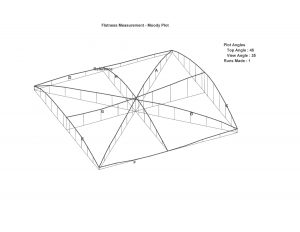
Per la verifica della planarità sono approvati 4 metodi: livelli elettronici, autocollimazione, laser e un dispositivo chiamato localizzatore di piani. Utilizziamo esclusivamente i livelli elettronici perché, per diversi motivi, rappresentano il metodo più preciso e veloce.
I laser e gli autocollimatori utilizzano un fascio di luce molto rettilineo come riferimento. La rettilineità di una piastra di granito si misura confrontando la variazione di distanza tra la piastra e il fascio di luce. Facendo rimbalzare un fascio di luce rettilineo su un bersaglio riflettente mentre quest'ultimo si sposta lungo la piastra, la distanza tra il fascio emesso e il fascio riflesso fornisce una misura della rettilineità.
Ecco il problema di questo metodo. Il bersaglio e la sorgente sono influenzati da vibrazioni, temperatura ambiente, una superficie del bersaglio non perfettamente piana o graffiata, contaminazione dell'aria e movimento dell'aria (correnti). Tutti questi fattori contribuiscono ad aumentare le componenti di errore. Inoltre, il contributo dell'errore dell'operatore durante le verifiche con un autocollimatore è maggiore.
Un utente esperto di autocollimatore può effettuare misurazioni molto precise, ma si trova comunque ad affrontare problemi di coerenza delle letture, soprattutto su distanze maggiori, poiché i riflessi tendono ad allargarsi o a diventare leggermente sfocati. Inoltre, un bersaglio non perfettamente piano e una lunga giornata passata a osservare attraverso la lente possono generare ulteriori errori.
Un dispositivo di localizzazione planare è semplicemente inadeguato. Questo dispositivo utilizza come riferimento una linea relativamente rettilinea (a differenza di un fascio di luce collimato o laser estremamente rettilineo). Non solo il dispositivo meccanico utilizza un indicatore con una risoluzione di solito di soli 20 µpollici, ma l'irregolarità della barra e la presenza di materiali diversi contribuiscono significativamente agli errori di misurazione. A nostro parere, sebbene il metodo sia accettabile, nessun laboratorio competente utilizzerebbe mai un dispositivo di localizzazione planare come strumento di controllo finale.
I livelli elettronici utilizzano la gravità come riferimento. I livelli elettronici differenziali non risentono delle vibrazioni. Hanno una risoluzione di appena 0,1 secondi d'arco e le misurazioni sono rapide, precise e l'errore da parte di un operatore esperto è minimo. Né i planometri né gli autocollimatori forniscono grafici topografici (Figura 1) o isometrici (Figura 2) della superficie generati al computer.
Figura 2
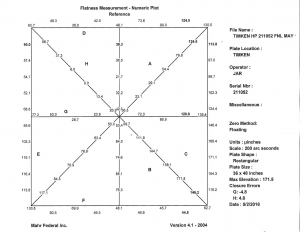
Un test di planarità della superficie adeguato
La corretta verifica della planarità della superficie è un aspetto così importante di questo documento che avrei dovuto inserirlo all'inizio. Come già affermato, la norma Fed Spec. GGG-p-463c NON è un metodo di calibrazione. Serve da guida per molti aspetti del granito di grado metrologico destinato ad essere acquistato da qualsiasi agenzia del governo federale, e ciò include i metodi di prova e le tolleranze o i gradi. Se un appaltatore dichiara di aver rispettato le norme Fed Specs, il valore di planarità deve essere determinato con il metodo Moody.
Moody era un tipo che, negli anni '50, aveva ideato un metodo matematico per determinare la planarità complessiva e tenere conto dell'orientamento delle linee testate, verificando se fossero sufficientemente vicine sullo stesso piano. Nulla è cambiato. Allied Signal ha cercato di migliorare il metodo matematico, ma ha concluso che le differenze erano così minime da non valere la pena dello sforzo.
Se un'azienda che si occupa di piani di riscontro utilizza livelli elettronici o laser, si avvale di un computer per eseguire i calcoli. Senza l'ausilio del computer, il tecnico che utilizza l'autocollimazione deve calcolare le letture manualmente. In realtà, non lo fa. Richiederebbe troppo tempo e, francamente, potrebbe risultare troppo complicato. In un test di planarità con il metodo Moody, il tecnico verifica la rettilineità di otto linee disposte a forma di bandiera britannica (Union Jack).
Il metodo Moody
Il metodo Moody è un modo matematico per determinare se le otto linee si trovano sullo stesso piano. Altrimenti, si hanno solo 8 linee rette che possono o non possono trovarsi sullo stesso piano o vicino ad esso. Inoltre, un appaltatore che dichiara di aderire alle specifiche Fed e utilizza l'autocollimazione,doveregenerare otto pagine di dati. Una pagina per ogni linea controllata per dimostrare il test, la riparazione o entrambi. Altrimenti, l'appaltatore non ha idea di quale sia il valore reale di planarità.
Sono certo che se siete tra coloro che fanno calibrare le proprie lastre da un appaltatore utilizzando l'autocollimazione, non avete mai visto quelle pagine! La Figura 3 è un esempio disolo unoSono necessarie otto pagine di calcoli per determinare la planarità complessiva. Un'indicazione di tale ignoranza e malizia è la presenza di numeri arrotondati nel vostro rapporto. Ad esempio, 200, 400, 650, ecc. Un valore calcolato correttamente è un numero reale. Ad esempio, 325,4 pollici cubi. Quando l'appaltatore utilizza il metodo di calcolo Moody e il tecnico calcola i valori manualmente, dovreste ricevere otto pagine di calcoli e un grafico isometrico. Il grafico isometrico mostra le diverse altezze lungo le varie linee e la distanza che separa i punti di intersezione selezionati.
Figura 3(Per calcolare manualmente la planarità occorrono otto pagine come questa. Assicuratevi di chiedere perché non ottenete questo risultato se il vostro appaltatore utilizza l'autocollimazione!)
Figura 4
I tecnici specializzati in calibri dimensionali utilizzano livelli differenziali (Figura 4) come strumenti preferiti per misurare le minime variazioni di angolarità tra una stazione di misura e l'altra. I livelli hanno una risoluzione fino a 0,1 secondi d'arco (5 µpollici utilizzando una slitta da 4"), sono estremamente stabili e non risentono di vibrazioni, distanze misurate, correnti d'aria, affaticamento dell'operatore, contaminazione dell'aria o di qualsiasi altro problema intrinseco ad altri dispositivi. Con l'ausilio di un computer, l'operazione diventa relativamente rapida, generando grafici topografici e isometrici che confermano la verifica e, soprattutto, la riparazione.
Un test di ripetibilità adeguato
La ripetibilità delle letture è il test più importante. L'attrezzatura che utilizziamo per eseguire il test di ripetibilità è composta da un dispositivo di lettura ripetibile, un trasduttore LVDT e un amplificatore necessario per letture ad alta risoluzione. Impostiamo l'amplificatore LVDT a una risoluzione minima di 10 µpollici o 5 µpollici per le piastre ad alta precisione.
Utilizzare un indicatore meccanico con una risoluzione di soli 20 µpollici è inutile se si sta cercando di verificare un requisito di ripetibilità di 35 µpollici. Gli indicatori hanno un'incertezza di 40 µpollici! La configurazione di lettura ripetuta simula una configurazione di calibro di altezza/pezzo.
La ripetibilità NON è la stessa cosa della planarità complessiva (piano medio). Mi piace pensare alla ripetibilità nel granito come a una misurazione del raggio costante.
Figura 5
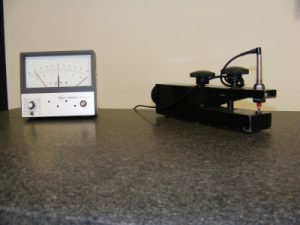
Se si verifica la ripetibilità di una sfera, si dimostra che il raggio della sfera non è cambiato. (Il profilo ideale di una piastra riparata correttamente ha una forma convessa e bombata.) Tuttavia, è evidente che la sfera non è perfettamente piatta. O meglio, quasi. Su una distanza estremamente breve, risulta piatta. Poiché la maggior parte delle operazioni di ispezione prevede l'utilizzo di un calibro di altezza molto vicino al pezzo, la ripetibilità diventa la proprietà più critica di una piastra di granito. È più importante della planarità complessiva, a meno che l'utente non stia verificando la rettilineità di un pezzo lungo.
Assicurati che il tuo fornitore esegua un test di ripetizione della lettura. Una piastra può presentare una lettura ripetuta significativamente fuori tolleranza, ma superare comunque un test di planarità! Sorprendentemente, un laboratorio può ottenere l'accreditamento per test che non includono il test di ripetizione della lettura. Un laboratorio che non è in grado di effettuare riparazioni o non è molto bravo a farlo preferisce eseguire solo il test di planarità. La planarità raramente cambia a meno che non si muova la piastra.
Il test di ripetibilità è il più semplice da eseguire, ma anche il più difficile da realizzare durante la lappatura. Assicuratevi che il vostro fornitore sia in grado di ripristinare la ripetibilità senza "concavare" la superficie o lasciare ondulazioni.
Test Delta T
Questo test prevede la misurazione della temperatura EFFETTIVA della pietra sulla sua superficie superiore e sulla sua superficie inferiore e il calcolo della differenza, Delta T, da riportare sul certificato.
È importante sapere che il coefficiente medio di dilatazione termica del granito è di 3,5 μin/pollice/grado. L'effetto della temperatura e dell'umidità ambiente su una lastra di granito è trascurabile. Tuttavia, una lastra di superficie può uscire dalla tolleranza o talvolta migliorare anche se con un Delta T di 0,3-0,5 gradi Fahrenheit. È necessario sapere se il Delta T è entro 0,12 gradi Fahrenheit rispetto alla differenza rispetto all'ultima calibrazione.
È importante sapere che la superficie di lavoro di una piastra si sposta verso le fonti di calore. Se la temperatura superiore è più alta di quella inferiore, la superficie superiore si solleva. Se invece la temperatura inferiore è più alta, evenienza rara, la superficie superiore si abbassa. Per un responsabile della qualità o un tecnico non è sufficiente sapere che la piastra è piana e ripetibile al momento della calibrazione o della riparazione, ma è necessario conoscere il suo Delta T al momento del test di calibrazione finale. In situazioni critiche, un utente può, misurando autonomamente il Delta T, determinare se una piastra è uscita dalla tolleranza a causa delle sole variazioni di Delta T. Fortunatamente, il granito impiega diverse ore o addirittura giorni per acclimatarsi all'ambiente. Lievi fluttuazioni della temperatura ambiente durante il giorno non lo influenzano. Per questi motivi, non riportiamo la temperatura o l'umidità ambiente di calibrazione, poiché i loro effetti sono trascurabili.
Usura della piastra di granito
Sebbene il granito sia più duro delle piastre d'acciaio, la sua superficie tende comunque a presentare avvallamenti. Il movimento ripetitivo di pezzi e calibri sulla piastra di riscontro è la principale causa di usura, soprattutto se la stessa area viene utilizzata costantemente. Sporco e polvere di rettifica che si accumulano sulla superficie della piastra accelerano il processo di usura, infiltrandosi tra i pezzi o i calibri e la superficie in granito. Durante lo spostamento di pezzi e calibri sulla superficie, la polvere abrasiva è solitamente la causa di ulteriore usura. Raccomando vivamente una pulizia costante per ridurre l'usura. Abbiamo riscontrato usura sulle piastre causata dalle consegne giornaliere di pacchi UPS posizionati sopra di esse! Queste aree di usura localizzate influenzano le letture dei test di ripetibilità della calibrazione. Evitate l'usura pulendo regolarmente.
Pulizia delle lastre di granito
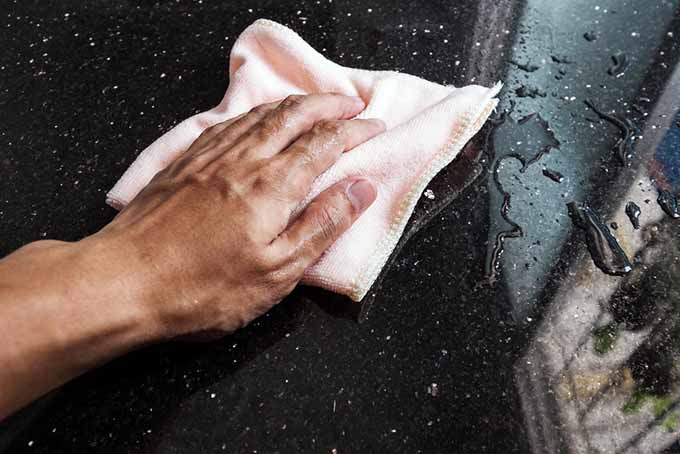
Per mantenere pulita la piastra, utilizzare un panno antistatico per rimuovere la polvere. Premere molto delicatamente, in modo da non lasciare residui di colla. Un panno antistatico ben usato è ottimo per raccogliere la polvere di levigatura tra una pulizia e l'altra. Non lavorare sempre nello stesso punto. Spostare l'attrezzatura intorno alla piastra, distribuendo l'usura. È possibile utilizzare l'alcol per pulire la piastra, ma tenere presente che ciò raffredderà temporaneamente la superficie. L'acqua con una piccola quantità di sapone è un'ottima soluzione. Anche i detergenti commerciali come il detergente Starrett sono ottimi, ma assicurarsi di rimuovere tutti i residui di sapone dalla superficie.
Riparazione di lastre di granito
Ormai dovrebbe essere evidente l'importanza di assicurarsi che il fornitore di piani di riscontro esegua una calibrazione competente. I laboratori tipo "Clearing House" che offrono programmi "tutto in una volta" raramente dispongono di un tecnico in grado di effettuare riparazioni. Anche se offrono riparazioni, non sempre hanno un tecnico con l'esperienza necessaria quando il piano di riscontro è significativamente fuori tolleranza.
Se vi viene detto che una targa non è riparabile a causa dell'usura eccessiva, chiamateci. Molto probabilmente possiamo effettuare la riparazione.
I nostri tecnici svolgono un apprendistato di uno o un anno e mezzo sotto la supervisione di un Tecnico Specializzato in Tabelle di Rilievo. Definiamo Tecnico Specializzato in Tabelle di Rilievo come una persona che ha completato l'apprendistato e vanta oltre dieci anni di esperienza aggiuntiva nella calibrazione e riparazione di tavole di riscontro. Noi di Dimensional Gauge abbiamo tre Tecnici Specializzati nel nostro staff, con un'esperienza complessiva di oltre 60 anni. Uno dei nostri Tecnici Specializzati è sempre disponibile per fornire supporto e assistenza in caso di situazioni complesse. Tutti i nostri tecnici hanno esperienza nella calibrazione di tavole di riscontro di tutte le dimensioni, dalle più piccole alle più grandi, in diverse condizioni ambientali, in vari settori industriali e nella gestione di problematiche di usura significative.
Le specifiche federali richiedono una finitura con una rugosità media aritmetica (AA) compresa tra 16 e 64. Noi preferiamo una finitura con un valore AA compreso tra 30 e 35. Questa rugosità è sufficiente a garantire che i pezzi e i calibri si muovano agevolmente e non si attacchino o si impiglino nella piastra di riscontro.
Quando effettuiamo una riparazione, controlliamo che la piastra sia montata correttamente e perfettamente livellata. Utilizziamo un metodo di lappatura a secco, ma in caso di usura estrema che richieda una rimozione sostanziale di granito, ricorriamo alla lappatura a umido. I nostri tecnici puliscono al termine del lavoro, sono meticolosi, veloci e precisi. Questo è importante perché il costo della manutenzione delle piastre in granito include i tempi di inattività e la perdita di produzione. Una riparazione eseguita a regola d'arte è di fondamentale importanza e non dovreste mai scegliere un fornitore in base al prezzo o alla comodità. Alcuni lavori di calibrazione richiedono personale altamente qualificato. Noi lo abbiamo.
Rapporti di calibrazione finali
Per ogni riparazione e calibrazione di piani di riscontro, forniamo report professionali dettagliati. I nostri report contengono una notevole quantità di informazioni critiche e pertinenti. La maggior parte delle informazioni fornite sono richieste dalle normative federali (Fed Spec). Escludendo quelle contenute in altri standard di qualità come ISO/IEC-17025, i requisiti minimi delle normative federali per i report sono i seguenti:
- Dimensioni in piedi (X' x X')
- Colore
- Stile (si riferisce a sporgenze senza morsetti o con due o quattro sporgenze)
- Modulo di elasticità stimato
- Tolleranza media sul piano (determinata in base al grado/dimensione)
- Tolleranza di lettura ripetuta (determinata dalla lunghezza diagonale in pollici)
- Piano medio come trovato
- Piano medio a sinistra
- Ripeti la lettura così come è stata trovata
- Ripetere la lettura da sinistra
- Delta T (differenza di temperatura tra la superficie superiore e quella inferiore)
Qualora il tecnico debba eseguire lavori di lappatura o riparazione sulla piastra di riscontro, il certificato di calibrazione è accompagnato da un disegno topografico o isometrico a comprova della validità della riparazione.
Un appunto sulle certificazioni ISO/IEC 17025 e sui laboratori che le possiedono.
Il fatto che un laboratorio sia accreditato per la calibrazione di piani di riscontro non significa necessariamente che sappia cosa sta facendo, tanto meno che lo stia facendo correttamente! Né implica necessariamente che il laboratorio sia in grado di effettuare riparazioni. Gli enti di accreditamento non distinguono tra verifica e calibrazione (riparazione).Ae ne conosco uno, forse2organismi di accreditamento cheLcravattaAAvrei messo un nastro intorno al mio cane se avessi pagato abbastanza! È triste constatare che ho visto laboratori ottenere l'accreditamento eseguendo solo uno dei tre test richiesti. Inoltre, ho visto laboratori ottenere l'accreditamento con incertezze irrealistiche e senza alcuna prova o dimostrazione di come avessero calcolato i valori. È davvero deplorevole.
Somma
Non bisogna sottovalutare l'importanza delle lastre di granito di precisione. La superficie piana di riferimento fornita dalle lastre di granito è la base su cui si effettuano tutte le altre misurazioni.
Si possono utilizzare gli strumenti di misura più moderni, precisi e versatili. Tuttavia, ottenere misurazioni accurate è difficile se la superficie di riferimento non è piana. Una volta, un potenziale cliente mi disse: "Beh, è solo roccia!". La mia risposta fu: "Va bene, ha ragione, e non può certo giustificare l'intervento di esperti per la manutenzione delle sue superfici di riferimento".
Il prezzo non è mai un buon motivo per scegliere un fornitore di piani di riscontro. Acquirenti, contabili e un numero preoccupante di ingegneri della qualità non sempre comprendono che la ricertificazione dei piani di riscontro in granito non è come ricertificare un micrometro, un calibro o un multimetro digitale.
Alcuni strumenti richiedono competenza, non un prezzo basso. Detto questo, le nostre tariffe sono molto ragionevoli. Soprattutto considerando la fiducia che riponete nella nostra professionalità e nella qualità del nostro lavoro. Offriamo un valore aggiunto che va ben oltre i requisiti della norma ISO 17025 e delle normative federali.
Le piastre di riscontro sono fondamentali per molte misurazioni dimensionali, e prendersene cura adeguatamente è necessario per garantire la precisione delle misurazioni.
Il granito è il materiale più utilizzato per i piani di lavoro grazie alle sue caratteristiche fisiche ideali, come la durezza superficiale e la bassa sensibilità alle variazioni di temperatura. Tuttavia, con l'uso continuato, i piani di lavoro sono soggetti a usura.
La planarità e la ripetibilità sono entrambi aspetti critici per determinare se una piastra fornisce o meno una superficie precisa per ottenere misurazioni accurate. Le tolleranze per entrambi gli aspetti sono definite dalle specifiche federali GGG-P-463C, DIN, GB, JJS... La planarità è la misura della distanza tra il punto più alto (il piano del tetto) e il punto più basso (il piano di base) sulla piastra. La ripetibilità determina se una misurazione effettuata in un'area può essere ripetuta sull'intera piastra entro la tolleranza dichiarata. Ciò garantisce che non vi siano picchi o avvallamenti sulla piastra. Se le letture non rientrano nelle linee guida stabilite, potrebbe essere necessario un intervento di rettifica per riportare le misurazioni entro le specifiche.
La calibrazione periodica dei piani di riscontro è necessaria per garantire planarità e ripetibilità nel tempo. Il gruppo di misurazione di precisione di Cross è accreditato ISO 17025 per la calibrazione di planarità e ripetibilità dei piani di riscontro. Utilizziamo il sistema di certificazione dei piani di riscontro Mahr, che include:
- Analisi dell'umore e del profilo,
- Grafici isometrici o numerici,
- Media di più esecuzioni e
- Classificazione automatica secondo gli standard di settore.
Il modello computerizzato Mahr determina qualsiasi deviazione angolare o lineare dal livello assoluto ed è ideale per la profilatura di precisione di superfici piane.
Gli intervalli tra le calibrazioni variano a seconda della frequenza di utilizzo, delle condizioni ambientali in cui si trova la piastra e dei requisiti di qualità specifici della vostra azienda. Una corretta manutenzione della piastra di riscontro può consentire intervalli più lunghi tra le calibrazioni, aiuta a evitare i costi aggiuntivi della riplaccatura e, soprattutto, garantisce che le misurazioni ottenute sulla piastra siano il più accurate possibile. Sebbene le piastre di riscontro appaiano robuste, sono strumenti di precisione e come tali vanno trattati. Ecco alcuni aspetti da considerare per la cura delle vostre piastre di riscontro:
- Mantieni il piatto pulito e, se possibile, coprilo quando non lo usi.
- Sulla piastra non deve essere posizionato nient'altro che calibri o pezzi da misurare.
- Non usare sempre lo stesso punto sul piatto.
- Se possibile, ruotare periodicamente il piatto.
- Rispetta il limite di carico della tua targa
Una base in granito di precisione può migliorare le prestazioni delle macchine utensili.
Nell'ingegneria meccanica in generale e nella costruzione di macchine utensili in particolare, i requisiti sono in costante aumento. Raggiungere la massima precisione e le massime prestazioni senza incrementare i costi rappresenta una sfida costante per rimanere competitivi. Il basamento della macchina utensile è un fattore determinante in questo contesto. Per questo motivo, sempre più produttori di macchine utensili si affidano al granito. Grazie alle sue proprietà fisiche, offre vantaggi evidenti che non possono essere ottenuti con l'acciaio o il calcestruzzo polimerico.
Il granito è una cosiddetta roccia vulcanica profonda, caratterizzata da una struttura molto densa e omogenea, un coefficiente di dilatazione termica estremamente basso, una bassa conducibilità termica e un elevato smorzamento delle vibrazioni.
Di seguito scoprirete perché l'opinione comune secondo cui il granito è adatto principalmente solo come base per macchine di misura a coordinate di alta gamma è ormai superata e perché questo materiale naturale, come base per macchine utensili, rappresenta un'alternativa molto vantaggiosa all'acciaio o alla ghisa, anche per macchine utensili di alta precisione.
Siamo in grado di produrre componenti in granito per il controllo dinamico del movimento, componenti in granito per motori lineari, componenti in granito per controlli non distruttivi (CND), componenti in granito per raggi X, componenti in granito per macchine di misura a coordinate (CMM), componenti in granito per macchine a controllo numerico (CNC), componenti in granito di precisione per laser, componenti in granito per il settore aerospaziale, componenti in granito per piattaforme di precisione...
Elevato valore aggiunto senza costi aggiuntivi.
Il crescente utilizzo del granito nell'ingegneria meccanica non è dovuto tanto all'enorme aumento del prezzo dell'acciaio, quanto piuttosto al fatto che il valore aggiunto che si ottiene con un basamento in granito per la macchina utensile è possibile a un costo aggiuntivo minimo o nullo. Ciò è dimostrato dai confronti di costo effettuati da noti produttori di macchine utensili in Germania e in Europa.
Il notevole vantaggio in termini di stabilità termodinamica, smorzamento delle vibrazioni e precisione a lungo termine reso possibile dal granito non può essere ottenuto con un basamento in ghisa o acciaio, o solo a costi relativamente elevati. Ad esempio, gli errori termici possono rappresentare fino al 75% dell'errore totale di una macchina, e spesso si tenta di compensarli tramite software, con risultati solo discreti. Grazie alla sua bassa conducibilità termica, il granito rappresenta la base migliore per una precisione duratura.
Con una tolleranza di 1 μm, il granito soddisfa facilmente i requisiti di planarità secondo la norma DIN 876 per il grado di precisione 00. Con un valore di 6 sulla scala di durezza da 1 a 10, è estremamente duro e, con il suo peso specifico di 2,8 g/cm³, si avvicina al valore dell'alluminio. Ciò si traduce anche in ulteriori vantaggi, come velocità di avanzamento più elevate, accelerazioni degli assi maggiori e una maggiore durata degli utensili per le macchine utensili da taglio. Pertanto, il passaggio da un basamento in ghisa a un basamento in granito colloca la macchina utensile in questione nella classe di alta precisione e prestazioni, senza costi aggiuntivi.
L'impronta ecologica migliorata del granito
A differenza di materiali come l'acciaio o la ghisa, la pietra naturale non richiede un grande dispendio energetico né l'utilizzo di additivi per la sua produzione. Sono necessarie solo quantità relativamente ridotte di energia per l'estrazione e il trattamento superficiale. Ciò si traduce in un impatto ambientale inferiore, che persino al termine del ciclo di vita di una macchina supera quello dell'acciaio. Il letto di granito può costituire la base per una nuova macchina o essere utilizzato per scopi completamente diversi, come la frantumazione per la costruzione di strade.
Non vi è alcuna carenza di risorse di granito. Si tratta di una roccia profonda formatasi dal magma all'interno della crosta terrestre. Si è "maturata" per milioni di anni ed è disponibile in grandissime quantità come risorsa naturale in quasi tutti i continenti, compresa tutta l'Europa.
Conclusione: I numerosi vantaggi dimostrabili del granito rispetto all'acciaio o alla ghisa giustificano la crescente propensione degli ingegneri meccanici a utilizzare questo materiale naturale come base per macchine utensili di alta precisione e ad alte prestazioni. Informazioni dettagliate sulle proprietà del granito, che risultano vantaggiose per le macchine utensili e l'ingegneria meccanica, sono disponibili in questo ulteriore articolo.
Una misurazione ripetuta è una misurazione di aree locali di planarità. La specifica di misurazione ripetuta stabilisce che una misurazione effettuata in qualsiasi punto della superficie di una piastra si ripeterà entro la tolleranza indicata. Il controllo più rigoroso della planarità di aree locali rispetto alla planarità complessiva garantisce una variazione graduale del profilo di planarità della superficie, minimizzando così gli errori locali.
La maggior parte dei produttori, comprese le marche importate, si attiene alle specifiche federali relative alle tolleranze di planarità complessiva, ma molti trascurano la ripetibilità delle misurazioni. Molte delle lamiere economiche o di basso valore disponibili oggi sul mercato non garantiscono la ripetibilità delle misurazioni. Un produttore che non garantisce la ripetibilità delle misurazioni NON produce lamiere conformi ai requisiti della norma ASME B89.3.7-2013, della specifica federale GGG-P-463c, DIN 876, GB, JJS...
Entrambi i parametri sono fondamentali per garantire una superficie di precisione per misurazioni accurate. La sola specifica di planarità non è sufficiente a garantire la precisione della misurazione. Prendiamo ad esempio una piastra di riscontro di grado A da 36 x 48 pollici, che soddisfa SOLO la specifica di planarità di 0,000300 pollici. Se il pezzo da controllare attraversa diverse sporgenze e il calibro utilizzato si trova in un punto basso, l'errore di misurazione potrebbe essere pari all'intera tolleranza in un'area, ovvero 0,000300 pollici! In realtà, può essere molto maggiore se il calibro poggia sulla pendenza di un piano inclinato.
Sono possibili errori compresi tra 0,000600" e 0,000800", a seconda della gravità della pendenza e della lunghezza del braccio del calibro utilizzato. Se questa piastra avesse una specifica di misurazione ripetuta di 0,000050" FIR, l'errore di misurazione sarebbe inferiore a 0,000050" indipendentemente dal punto in cui viene effettuata la misurazione sulla piastra. Un altro problema, che di solito si presenta quando un tecnico non qualificato tenta di ripristinare la superficie di una piastra in loco, è l'utilizzo della sola misurazione ripetuta per certificare una piastra.
Gli strumenti utilizzati per verificare la ripetibilità NON sono progettati per controllare la planarità complessiva. Se azzerati su una superficie perfettamente curva, continueranno a indicare zero, indipendentemente dal fatto che tale superficie sia perfettamente piana, concava o convessa di 1/2 pollice! Essi verificano semplicemente l'uniformità della superficie, non la planarità. Solo una piastra che soddisfa sia la specifica di planarità SIA la specifica di ripetibilità della misurazione soddisfa pienamente i requisiti della norma ASME B89.3.7-2013 o della specifica federale GGG-P-463c.
Ask us about or flatness specification and repeat measurement promise by calling +86 19969991659 or emailing INFO@ZHHIMG.COM
Sì, ma possono essere garantiti solo per uno specifico gradiente di temperatura verticale. Gli effetti della dilatazione termica sulla piastra potrebbero facilmente causare una variazione di precisione superiore alla tolleranza in caso di variazione del gradiente. In alcuni casi, se la tolleranza è sufficientemente ristretta, il calore assorbito dall'illuminazione dall'alto può causare una variazione di gradiente sufficiente nell'arco di diverse ore.
Il granito ha un coefficiente di dilatazione termica di circa 0,0000035 pollici per pollice per 1°F. Ad esempio: una piastra di superficie di 36" x 48" x 8" ha una precisione di 0,000075" (metà del grado AA) con un gradiente di 0°F, la parte superiore e inferiore hanno la stessa temperatura. Se la parte superiore della piastra si riscalda fino a raggiungere una temperatura di 1°F superiore a quella inferiore, la precisione cambierebbe a 0,000275" convessa! Pertanto, ordinare una piastra con una tolleranza inferiore al grado AA per laboratori dovrebbe essere preso in considerazione solo se è disponibile un adeguato controllo climatico.
Una piastra di riscontro deve essere supportata in 3 punti, idealmente posizionati al 20% della lunghezza dalle estremità della piastra. Due supporti devono essere posizionati al 20% della larghezza dai lati lunghi, e il supporto rimanente deve essere centrato. Solo 3 punti possono appoggiare saldamente su qualsiasi superficie che non sia una superficie di precisione.
La piastra deve essere supportata in questi punti durante la produzione e solo in questi tre punti durante l'utilizzo. Tentare di supportare la piastra in più di tre punti comporterà che la piastra riceva il supporto da varie combinazioni di tre punti, che non saranno gli stessi tre punti su cui è stata supportata durante la produzione. Ciò introdurrà errori poiché la piastra si fletterà per adattarsi alla nuova configurazione di supporto. Tutti i supporti in acciaio Zhhimg hanno travi di supporto progettate per allinearsi con i punti di supporto corretti.
Se la piastra è correttamente supportata, il livellamento di precisione è necessario solo se l'applicazione lo richiede. Il livellamento non è necessario per mantenere la precisione di una piastra correttamente supportata.
Perché scegliere il granito perBasi delle macchineEComponenti metrologici?
La risposta è "sì" per quasi tutte le applicazioni. I vantaggi del granito includono: assenza di ruggine o corrosione, quasi totale immunità alla deformazione, assenza di rigonfiamenti compensativi in caso di scheggiature, maggiore durata, funzionamento più fluido, maggiore precisione, praticamente amagnetico, basso coefficiente di dilatazione termica e bassi costi di manutenzione.
Il granito è un tipo di roccia ignea estratta per la sua estrema resistenza, densità, durabilità e resistenza alla corrosione. Ma il granito è anche molto versatile: non è adatto solo a forme quadrate e rettangolari! Infatti, Starrett Tru-Stone lavora regolarmente con successo con componenti in granito progettati in forme, angoli e curve di ogni tipo.
Grazie ai nostri processi all'avanguardia, le superfici di taglio possono risultare eccezionalmente piane. Queste qualità rendono il granito il materiale ideale per la realizzazione di basi per macchinari e componenti metrologici su misura, sia per dimensioni che per design. Il granito è:
lavorabile
perfettamente piatto una volta tagliato e rifinito
resistente alla ruggine
durevole
di lunga durata
I componenti in granito sono inoltre facili da pulire. Quando si realizzano progetti personalizzati, è fondamentale scegliere il granito per i suoi vantaggi superiori.
STANDARD/ APPLICAZIONI AD ALTA USURA
Il granito utilizzato da ZhongHui per i nostri piani di riscontro standard ha un alto contenuto di quarzo, che offre una maggiore resistenza all'usura e ai danni. I nostri colori Superior Black e Crystal Pink hanno un basso tasso di assorbimento d'acqua, riducendo al minimo la possibilità che i vostri calibri di precisione si arrugginiscano quando appoggiati sui piani. I colori del granito offerti da ZhongHui riducono i riflessi, il che significa meno affaticamento visivo per chi utilizza i piani. Abbiamo scelto i nostri tipi di granito tenendo conto della dilatazione termica, al fine di minimizzare questo aspetto.
APPLICAZIONI PERSONALIZZATE
Quando la tua applicazione richiede una piastra con forme personalizzate, inserti filettati, scanalature o altre lavorazioni meccaniche, ti conviene scegliere un materiale come la diabase nera. Questo materiale naturale offre rigidità superiore, eccellente smorzamento delle vibrazioni e migliore lavorabilità.
Sì, se non sono eccessivamente usurate. Le nostre attrezzature e gli impianti di produzione garantiscono le condizioni ottimali per una corretta calibrazione delle piastre e per un'eventuale rilavorazione. In genere, se una piastra rientra entro 0,001" dalla tolleranza richiesta, può essere rettificata in loco. Se una piastra è usurata al punto da superare di oltre 0,001" la tolleranza, o se presenta gravi vaiolature o intaccature, dovrà essere inviata in fabbrica per la rettifica prima della lappatura.
È fondamentale prestare la massima attenzione nella scelta del tecnico che si occuperà della calibrazione e della rettifica in loco. Vi invitiamo a scegliere con cura il servizio di calibrazione. Richiedete l'accreditamento e verificate che l'attrezzatura utilizzata dal tecnico sia dotata di una certificazione di calibrazione tracciabile da un ente nazionale di ispezione. Imparare a lappare correttamente il granito di precisione richiede molti anni di esperienza.
ZhongHui garantisce tempi di consegna rapidi per le calibrazioni effettuate presso il nostro stabilimento. Se possibile, inviateci le vostre piastre per la calibrazione. La qualità e la reputazione della vostra azienda dipendono dalla precisione dei vostri strumenti di misura, comprese le piastre di riscontro!
Le nostre lastre di superficie nere hanno una densità notevolmente superiore e sono fino a tre volte più rigide. Pertanto, una lastra realizzata in nero non necessita di essere spessa quanto una lastra di granito delle stesse dimensioni per avere una resistenza alla flessione uguale o superiore. Spessore ridotto significa peso inferiore e costi di spedizione più bassi.
Attenzione a chi utilizza granito nero di qualità inferiore a parità di spessore. Come già accennato, le proprietà del granito, come quelle del legno o del metallo, variano a seconda del materiale e del colore, e questo non è un indicatore affidabile di rigidità, durezza o resistenza all'usura. Infatti, molti tipi di granito nero e diabasi sono molto morbidi e non adatti per applicazioni su piani di lavoro.
No. Le attrezzature specializzate e la formazione necessarie per rilavorare questi articoli impongono che vengano restituiti in fabbrica per la calibrazione e la rilavorazione.
Sì. La ceramica e il granito hanno caratteristiche simili e i metodi utilizzati per calibrare e lappare il granito possono essere impiegati anche per gli oggetti in ceramica. La lappatura della ceramica è più complessa rispetto a quella del granito, il che comporta un costo maggiore.
Sì, a condizione che gli inserti siano incassati al di sotto della superficie. Se gli inserti in acciaio sono a filo o al di sopra del piano della superficie, devono essere spianati verso il basso prima che la lamiera possa essere lappata. Se necessario, possiamo fornire questo servizio.
Sì. Gli inserti in acciaio con la filettatura desiderata (inglese o metrica) possono essere incollati con resina epossidica alla piastra nelle posizioni desiderate. ZhongHui utilizza macchine CNC per garantire la massima precisione di posizionamento degli inserti, entro +/- 0,005”. Per inserti meno critici, la nostra tolleranza di posizionamento per gli inserti filettati è di ±0,060”. Altre opzioni includono barre a T in acciaio e scanalature a coda di rondine ricavate direttamente nel granito.
Gli inserti correttamente incollati con resina epossidica ad alta resistenza e una buona manodopera sono in grado di sopportare notevoli forze torsionali e di taglio. In un recente test, utilizzando inserti filettati da 3/8"-16, un laboratorio di prova indipendente ha misurato la forza necessaria per estrarre un inserto incollato con resina epossidica da una piastra di riscontro. Sono state testate dieci piastre. Di queste dieci, in nove casi, il granito si è fratturato per primo. Il carico medio al punto di rottura è stato di 10.020 libbre per il granito grigio e di 12.310 libbre per quello nero. Nell'unico caso in cui un inserto si è staccato dalla piastra, il carico al punto di rottura è stato di 12.990 libbre! Se un pezzo in lavorazione forma un ponte attraverso l'inserto e viene applicata una coppia eccessiva, è possibile generare una forza sufficiente a fratturare il granito. Anche per questo motivo, ZhongHui fornisce linee guida sulla coppia massima di sicurezza applicabile agli inserti incollati con resina epossidica: https://www.zhhimg.com/standard-thread-inserts-product/
Sì, ma solo presso il nostro stabilimento. Nel nostro impianto, possiamo riportare quasi qualsiasi piastra a condizioni pari al nuovo, solitamente a meno della metà del costo di sostituzione. I bordi danneggiati possono essere riparati esteticamente, scanalature profonde, intaccature e cavità possono essere eliminate tramite rettifica e i supporti fissati possono essere sostituiti. Inoltre, possiamo modificare la vostra piastra per aumentarne la versatilità aggiungendo inserti in acciaio pieno o filettato e realizzando fessure o labbri di serraggio, secondo le vostre specifiche.
Perché scegliere il granito?
Il granito è un tipo di roccia ignea formatasi sulla Terra milioni di anni fa. La sua composizione comprende numerosi minerali, come il quarzo, estremamente duro e resistente all'usura. Oltre alla durezza e alla resistenza all'usura, il granito ha un coefficiente di dilatazione termica pari a circa la metà di quello della ghisa. Poiché il suo peso volumetrico è circa un terzo di quello della ghisa, il granito è più facile da lavorare.
Per le basi delle macchine e i componenti metrologici, il granito nero è il colore più utilizzato. Il granito nero ha una percentuale di quarzo più elevata rispetto ad altri colori ed è, pertanto, il più resistente all'usura.
Il granito è conveniente e le superfici di taglio possono essere eccezionalmente piane. Non solo può essere lappato a mano per ottenere una precisione estrema, ma la rigenerazione può essere eseguita senza spostare la piastra o il tavolo in un altro luogo. Si tratta di un'operazione interamente manuale di lappatura e in genere costa molto meno rispetto alla rigenerazione di un'alternativa in ghisa.
Queste qualità rendono il granito il materiale ideale per creare basi per macchine e componenti metrologici di dimensioni e design personalizzati, come ad esempiopiastra di superficie in granito.
ZhongHui produce prodotti in granito su misura, creati per soddisfare specifiche esigenze di misurazione. Questi articoli su misura variano dabordi dritti toquadrati triangolari. Grazie alla natura versatile del granito, ilcomponentiPossono essere prodotti in qualsiasi dimensione richiesta; sono resistenti e durevoli.
Vantaggi delle superfici in granito
L'importanza di misurare su una superficie piana fu stabilita dall'inventore britannico Henry Maudsley nel XIX secolo. In qualità di innovatore nel campo delle macchine utensili, egli determinò che per una produzione costante di pezzi era necessaria una superficie solida per misurazioni affidabili.
La rivoluzione industriale creò la necessità di superfici di misura, pertanto l'azienda di ingegneria Crown Windley elaborò degli standard di produzione. Gli standard per le piastre di riscontro furono definiti per la prima volta da Crown nel 1904, utilizzando il metallo. Con l'aumento della domanda e del costo del metallo, si iniziarono a studiare materiali alternativi per le superfici di misura.
In America, il progettista di monumenti Wallace Herman stabilì che il granito nero era un'eccellente alternativa al metallo come materiale per le superfici di misurazione. Poiché il granito è amagnetico e non arrugginisce, divenne ben presto la superficie di misurazione preferita.
Un piano di lavoro in granito è un investimento essenziale per laboratori e strutture di prova. Un piano di lavoro in granito di 600 x 600 mm può essere montato su un supporto. I supporti offrono un'altezza di lavoro di 34” (0,86 m) con cinque punti di regolazione per il livellamento.
Per ottenere risultati di misurazione affidabili e coerenti, è fondamentale utilizzare una piastra di granito. Essendo una superficie liscia e stabile, permette di manipolare gli strumenti con precisione.
I principali vantaggi delle superfici in granito sono:
• Non riflettente
• Resistente agli agenti chimici e alla corrosione
• Coefficiente di dilatazione termica inferiore rispetto alla ghisa per carrelli, quindi meno influenzato dalle variazioni di temperatura.
• Naturalmente rigido e resistente all'usura
• La superficie rimane inalterata se graffiata
• Non arrugginisce
• Non magnetico
• Facile da pulire e da mantenere
• La calibrazione e la rettifica possono essere effettuate in loco.
• Adatto per la foratura di inserti di supporto filettati
• Elevato smorzamento delle vibrazioni
In molte officine, sale di controllo qualità e laboratori, le piastre di riscontro in granito di precisione sono fondamentali per misurazioni accurate. Poiché ogni misurazione lineare dipende da una superficie di riferimento precisa da cui vengono ricavate le dimensioni finali, le piastre di riscontro offrono il miglior piano di riferimento per l'ispezione e la tracciatura dei pezzi prima della lavorazione. Sono inoltre basi ideali per effettuare misurazioni di altezza e per la calibrazione delle superfici. Inoltre, l'elevato grado di planarità, stabilità, qualità generale e cura nella lavorazione le rendono un'ottima scelta per il montaggio di sofisticati sistemi di misurazione meccanici, elettronici e ottici. Per ognuno di questi processi di misurazione, è indispensabile mantenere le piastre di riscontro calibrate.
Ripeti le misurazioni e la planarità
Sia la planarità che la ripetibilità delle misurazioni sono fondamentali per garantire una superficie di precisione. La planarità può essere definita come la condizione in cui tutti i punti della superficie sono contenuti tra due piani paralleli: il piano di base e il piano di copertura. La distanza tra i due piani rappresenta la planarità complessiva della superficie. Questa misurazione della planarità è generalmente soggetta a una tolleranza e può includere una classificazione.
Le tolleranze di planarità per tre gradi standard sono definite nelle specifiche federali come determinate dalla seguente formula:
Grado di laboratorio AA = (40 + diagonale² / 25) x 0,000001 pollici (unilaterale)
Grado di ispezione A = Grado di laboratorio AA x 2
Classe B per officina = Classe AA per laboratorio x 4
Oltre alla planarità, è necessario garantire la ripetibilità. Una misurazione ripetuta è una misurazione di aree di planarità locali. Si tratta di una misurazione effettuata in qualsiasi punto della superficie di una piastra che si ripeterà entro la tolleranza dichiarata. Il controllo della planarità di aree locali con una tolleranza più ristretta rispetto alla planarità complessiva garantisce una variazione graduale del profilo di planarità della superficie, minimizzando così gli errori locali.
Per garantire che una piastra di riscontro soddisfi sia le specifiche di planarità che quelle di ripetibilità delle misurazioni, i produttori di piastre di riscontro in granito dovrebbero utilizzare la specifica federale GGG-P-463c come base per le proprie specifiche. Questo standard affronta la precisione della ripetibilità delle misurazioni, le proprietà del materiale dei graniti per piastre di riscontro, la finitura superficiale, la posizione dei punti di supporto, la rigidità, i metodi di ispezione accettabili e l'installazione degli inserti filettati.
Prima che una piastra di riscontro si usuri oltre le specifiche di planarità complessiva, mostrerà dei perni usurati o ondulati. L'ispezione mensile per errori di misurazione ripetuti, utilizzando un comparatore di precisione, permetterà di identificare i punti di usura. Un comparatore di precisione è uno strumento ad alta precisione che rileva errori locali e può essere visualizzato su un amplificatore elettronico ad alto ingrandimento.
Verifica dell'accuratezza della piastra
Seguendo alcune semplici linee guida, un investimento in una piastra di riscontro in granito dovrebbe durare molti anni. A seconda dell'utilizzo della piastra, dell'ambiente di lavoro e della precisione richiesta, la frequenza di verifica della precisione della piastra varia. In generale, si consiglia di ricalibrare completamente una piastra nuova entro un anno dall'acquisto. Se la piastra viene utilizzata frequentemente, è consigliabile ridurre questo intervallo a sei mesi.
Prima che una piastra di riscontro si usuri oltre le specifiche di planarità complessiva, mostrerà dei perni usurati o ondulati. L'ispezione mensile per errori di misurazione ripetuti, utilizzando un comparatore di precisione, permetterà di identificare i punti di usura. Un comparatore di precisione è uno strumento ad alta precisione che rileva errori locali e può essere visualizzato su un amplificatore elettronico ad alto ingrandimento.
Un programma di ispezione efficace dovrebbe includere controlli periodici con un autocollimatore, che fornisca una calibrazione effettiva della planarità complessiva riconducibile al National Institute of Standards and Technology (NIST). Periodicamente, è necessaria una calibrazione completa da parte del produttore o di una società indipendente.
Variazioni tra le calibrazioni
In alcuni casi, si riscontrano variazioni nella calibrazione delle piastre di riscontro. Talvolta, fattori come le modifiche superficiali dovute all'usura, l'uso scorretto delle apparecchiature di ispezione o l'utilizzo di apparecchiature non calibrate possono spiegare tali variazioni. I due fattori più comuni, tuttavia, sono la temperatura e il supporto.
Una delle variabili più importanti è la temperatura. Ad esempio, la superficie potrebbe essere stata lavata con una soluzione calda o fredda prima della calibrazione e non aver avuto il tempo sufficiente per normalizzarsi. Altre cause di variazione di temperatura includono correnti d'aria fredda o calda, luce solare diretta, illuminazione dall'alto o altre fonti di calore radiante sulla superficie della piastra.
Possono inoltre verificarsi variazioni nel gradiente termico verticale tra inverno ed estate. In alcuni casi, la piastra non ha il tempo sufficiente per stabilizzarsi dopo la spedizione. È consigliabile registrare il gradiente termico verticale al momento della calibrazione.
Un'altra causa comune di variazione nella calibrazione è un supporto inadeguato della piastra. Una piastra di riscontro dovrebbe essere supportata in tre punti, idealmente posizionati al 20% della lunghezza dalle estremità della piastra. Due supporti dovrebbero essere posizionati al 20% della larghezza dai lati lunghi, e il supporto rimanente dovrebbe essere centrato.
Solo tre punti possono appoggiare saldamente su qualsiasi superficie che non sia di precisione. Tentare di sostenere la piastra in più di tre punti farà sì che la piastra riceva il suo supporto da varie combinazioni di tre punti, che non saranno gli stessi tre punti su cui è stata sostenuta durante la produzione. Ciò introdurrà errori poiché la piastra si fletterà per adattarsi alla nuova disposizione dei punti di supporto. Si consiglia di utilizzare supporti in acciaio con travi di supporto progettate per allinearsi con i punti di supporto corretti. I supporti per questo scopo sono generalmente disponibili presso il produttore della piastra di riscontro.
Se la piastra è correttamente supportata, il livellamento di precisione è necessario solo se specificato dall'applicazione. Il livellamento non è necessario per mantenere la precisione di una piastra correttamente supportata.
È importante mantenere pulita la piastra. La polvere abrasiva presente nell'aria è solitamente la principale causa di usura della piastra, poiché tende a depositarsi sui pezzi in lavorazione e sulle superfici di contatto degli strumenti di misura. Coprire le piastre per proteggerle dalla polvere e dai danni. La durata utile della piastra può essere prolungata coprendola quando non viene utilizzata.
Prolungare la durata della piastra
Seguendo alcune semplici linee guida, si ridurrà l'usura di una lastra di granito e, in definitiva, se ne prolungherà la durata.
Innanzitutto, è importante mantenere pulita la piastra. La polvere abrasiva dispersa nell'aria è solitamente la principale causa di usura della piastra, poiché tende a depositarsi sui pezzi in lavorazione e sulle superfici di contatto degli strumenti di misura.
È inoltre importante coprire le piastre per proteggerle dalla polvere e dai danni. La durata utile può essere prolungata coprendo la piastra quando non viene utilizzata.
Ruotare periodicamente la piastra in modo che una singola area non venga sottoposta a un'usura eccessiva. Si consiglia inoltre di sostituire i contatti in acciaio degli strumenti di misura con contatti in carburo.
Evitate di appoggiare cibo o bevande gassate sul piatto. Molte bevande gassate contengono acido carbonico o fosforico, che possono sciogliere i minerali più morbidi e lasciare piccole cavità sulla superficie.
Dove ricadere
Quando una piastra di granito necessita di essere ripiastrata, è opportuno valutare se eseguire questo servizio in loco o presso il centro di calibrazione. È sempre preferibile far ripiattare la piastra in fabbrica o in un centro specializzato. Tuttavia, se la piastra non è eccessivamente usurata, generalmente entro 0,001 pollici dalla tolleranza richiesta, può essere ripiastrata in loco. Se una piastra è usurata al punto da superare di oltre 0,001 pollici la tolleranza, o se presenta profonde scheggiature o intaccature, deve essere inviata in fabbrica per la rettifica prima della ripiastratura.
Un impianto di calibrazione dispone delle attrezzature e delle impostazioni di fabbrica che forniscono le condizioni ottimali per una corretta calibrazione delle piastre e per un'eventuale rilavorazione.
È fondamentale prestare la massima attenzione nella scelta del tecnico incaricato della calibrazione e della rettifica in loco. Richiedete l'accreditamento e verificate che l'attrezzatura utilizzata dal tecnico sia dotata di una calibrazione con tracciabilità NIST. Anche l'esperienza è un fattore importante, poiché occorrono molti anni per imparare a lappare correttamente il granito di precisione.
Le misurazioni critiche iniziano con una piastra di riferimento in granito di precisione come punto di partenza. Garantendo un riferimento affidabile tramite l'utilizzo di una piastra di riferimento opportunamente calibrata, i produttori dispongono di uno strumento essenziale per misurazioni precise e componenti di qualità superiore.
Lista di controllo per le variazioni di calibrazione
- La superficie è stata lavata con una soluzione calda o fredda prima della calibrazione e non le è stato concesso un tempo sufficiente per normalizzarsi.
- La piastra non è supportata correttamente.
- Variazione di temperatura.
- Bozze.
- Evitare l'esposizione diretta alla luce solare o ad altre fonti di calore radiante sulla superficie del piatto. Assicurarsi che l'illuminazione dall'alto non riscaldi la superficie.
- Variazioni del gradiente termico verticale tra inverno ed estate. Se possibile, è opportuno conoscere il gradiente termico verticale al momento della calibrazione.
- La piastra non ha avuto tempo sufficiente per normalizzarsi dopo la spedizione.
- Uso improprio delle apparecchiature di ispezione o utilizzo di apparecchiature non calibrate.
- Modifiche superficiali dovute all'usura.
Consigli tecnologici
Poiché ogni misurazione lineare dipende da una superficie di riferimento precisa da cui vengono rilevate le dimensioni finali, le piastre di riscontro forniscono il miglior piano di riferimento per l'ispezione e la tracciatura del pezzo prima della lavorazione.
Il controllo della planarità di aree locali con una tolleranza più ristretta rispetto alla planarità complessiva garantisce una variazione graduale del profilo di planarità della superficie, riducendo al minimo gli errori locali.